






Draganfly Innovations Inc. Innovative UAV Aircraft & Aerial Video Systems

Press Releases

Official press releases from Draganfly Innovations Inc. about our Industrial, Professional, Government and Educational aerial video and photography systems.

Draganflyer X8 8-Rotor UAV Helicopter Provides High Definition Wireless Video and High Resolution Photographs

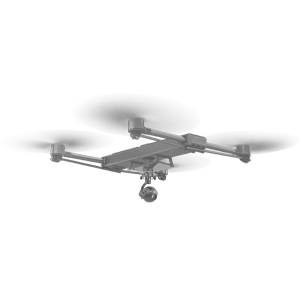
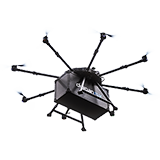
The trailblazing team at Draganfly Innovations Inc., the creators of the Draganflyer X6 and the Draganflyer X4, are excited to introduce the newest and most revolutionary RC helicopter yet, the Draganflyer X8 UAV. Designed for commercial/industrial aerial video and photography applications, the Draganflyer X8 is perfect for inspection and reconnaissance missions. With the increased payload capability, cutting-edge camera systems, and the option to use the handheld Ground Control Station, the Draganflyer X8 is sure to wow your socks off.

Saskatoon, Saskatchewan (PRWEB) Draganfly Innovations Inc. is announcing the release of the new Draganflyer X8 helicopter, a miniature UAV for commercial/industrial aerial video and photography. The unique design utilizes eight main horizontal rotor blades and allows the Draganflyer X8 helicopter to hover efficiently and maneuver rapidly using differential thrust. Eight industrial electric motors allow the Draganflyer X8 to carry heavier and more advanced payloads while providing more safety features than ever before. The Draganflyer X8 will also be compatible with our latest technologies, including the handheld Ground Control Station (GCS) and IP video camera systems.

Draganflyer X8

Draganflyer X8

The increased payload capability of the Draganflyer X8 has allowed it to carry a select variety of digital SLR cameras and various 1080p video cameras. The Draganflyer X8’s industrial-strength electric motors provide increased thrust over the Draganflyer X6, which allows the Draganflyer X8 to carry an increased payload.

Innovative new camera systems will be offered as options for the Draganflyer X8 UAV, including the new IP video cameras. IP video cameras work by transmitting digital video over an 802.11n wifi connection. Digital video is less susceptible to random noise than analog video. Digital video is also more secure because IP cameras work over their own wireless network, which can be encrypted to protect the video stream from unauthorized viewing. Because the IP cameras are digital, they can record video to a buffer in internal memory before streaming it to the receiving station. This means that the cameras can be used to capture high resolution still pictures while video is being recorded. Video from the IP cameras can be streamed over the internet easily, allowing you to transmit your video live to almost anywhere in the world.

The Draganflyer X8 UAV will be our first UAV helicopter to offer the new handheld Ground Control Station (GCS) as an option. The GCS is currently in development; when complete, it will effectively contain all the features of both the handheld controller and the video base station in one handheld package. Running a Linux operating system on an Intel Atom™ processor allows the GCS to run our existing DraganView software and provide helicopter control at the same time.


Safety and durability have been incorporated into the design of each Draganflyer helicopter and the Draganflyer X8 is no exception. It offers more safety features than ever before. Even if an in-flight collision causes one of the motors to stop working, the Draganflyer X8 helicopter, with dual motors on each of the four arms, will still be able to fly using the remaining seven motors. Other safety features include high intensity LED navigation lights for distance or low-light flying and auto-landing if the radio link between the helicopter and its controller is lost. An onboard flight recorder stores telemetry and flight data in a removable memory card. This information can be used for post-flight analysis with our DraganView software.

The Draganflyer X8 UAV helicopter has been designed with a unique folding carbon fiber frame. This allows the Draganflyer X8 to become conveniently compact for storage and transportation. Once the Draganflyer X8 carbon fiber frame is folded, it fits securely in its back-packable case.

The Draganflyer X8 is a fully functional, miniature, unmanned, electric powered helicopter. Aimed at industrial and commercial use, it provides reconnaissance and inspection information using onboard wireless video (equipped with digital video recorders) and still images. The Draganflyer X8 helicopter achieves its stability by using an onboard processor running custom-designed Draganfly software and receiving data from eleven onboard sensors (three gyros, three accelerometers, three magnetometers, one barometric pressure sensor, and one GPS receiver). It is easily piloted by users with minimal training. The Draganflyer X8 helicopter determines its own orientation and motion, moving where the operator instructs it, automatically handling the complex attitude and altitude adjustments that would normally require an experienced pilot.

The Draganflyer X8 helicopter can be put into GPS hold mode where it will maintain its position without any user input. This means that once the GPS hold is activated, the pilot can concentrate on framing the shot using one of the various cameras that the Draganflyer X8 can carry.

The Draganflyer X8 helicopter is flown using a custom-designed handheld controller with a 2.8” color OLED touchscreen that displays telemetry and flight data. The Draganflyer X8 handheld controller receives streaming video sent by the helicopter and in turn, sends this video to a pair of video goggles. The video goggles enable the operator to view what the helicopter is seeing in real-time while also keeping an eye on the helicopter itself.

Bookmark This Post: These icons link to social bookmarking sites where readers can share and discover new web pages.
  • Facebook
  • Digg
  • Technorati
  • Fark
  • del.icio.us
  • Google
  • Live
  • StumbleUpon

This article is copyright protected.  Written permission by Draganfly Innovation Inc. must be granted to use anything from Draganfly.com

Draganflyer X6 Unmanned Aerial Vehicle Takes Flight in OPP Police Applications

Identification Constable Marc Sharpe of the Kenora Identification Services Unit, Ontario Provincial Police with Draganflyer X6.

Identification Constable Marc Sharpe of the Kenora Identification Services Unit, Ontario Provincial Police with Draganflyer X6.

The Draganflyer X6 UAV helicopter, designed by Draganfly Innovations Inc. for aerial photography and videography, was used by the Forensic Identification Unit of the Ontario Provincial Police (OPP) on February 21, 2009 to collect evidence in a homicide investigation in a remote area outside of Kenora, Ontario, Canada. This represented the first operational mission of a federally approved, commercially produced Unmanned Aerial Vehicle by an emergency service in North America.

Saskatoon, Saskatchewan (PRWEB) March 26, 2009 — From the pages of Popular Science Magazine’s “Top 100 Innovations of the Year“, Draganfly Innovations’ Draganflyer X6 Unmanned Aerial Vehicle (UAV) has made the significant leap to commercial utilization.

The six-rotor, one kilogram, electric, VTOL, UAV helicopter designed for aerial photography and videography was used by the Forensic Identification Unit of the Ontario Provincial Police (OPP) on February 21, 2009 to collect evidence in a homicide investigation in a remote area outside of Kenora, Ontario, Canada. This represented the first operational mission of a federally approved, commercially produced Unmanned Aerial Vehicle by an emergency service in North America.

Then, in March, 2009, the Saskatoon Police Service announced that it will follow suit, becoming the first urban police service in North America to utilize the Draganflyer X6 Police UAV for aerial forensic purposes within city limits.

Unmanned Aerial Vehicles such as Draganfly’s Draganflyer X6 helicopter are subject to Transport Canada aviation regulations. Prior to the Saskatoon Police Service being able to test the Draganflyer X6, Transport Canada officials were in Saskatoon for a flight demonstration, to undertake their standard risk assessment testing, and discuss technical issues with Draganfly Innovations.

Under the Special Flight Operations Certificate granted by Transport Canada, Draganfly Innovations personnel will operate the Draganflyer X6 Police UAV Helicopter while Saskatoon Police Service personnel will operate the cameras used for forensic support.

The use of UAVs goes back to the 1950’s with the military, but only recently has it evolved into police applications. One of the innovators was Identification Constable Marc Sharpe of the Kenora Identification Services unit of the Ontario Provincial Police.

The Ontario Provincial Police's Draganflyer X6 UAV helicopter captures high resolution aerial photographs of major case scenes. The Draganflyer X6's onboard camera has remote controlled zoom, tilt and shutter. Typically, one police officer controls the UAV and another operates the camera controls.

The Ontario Provincial Police's Draganflyer X6 UAV helicopter captures high resolution aerial photographs of major case scenes. The Draganflyer X6's onboard camera has remote controlled zoom, tilt and shutter. Typically, one police officer controls the UAV and another operates the camera controls.

“Having used a fixed wing UAV since 2007, I could see the potential for great benefits to our forensic support operations. It gave us the ability to collect aerial evidence quickly and at minimum cost,” states Sharpe. “However, it also became apparent that in order to improve and expand operational effectiveness, an optimal UAV would need certain attributes. It would need to be small and light, have Vertical Take Off and Landing VTOL capabilities, have a GPS hold system while hovering, be constructed of exceptionally strong materials and be completely transportable.”

The Draganflyer X6 met all Sharpe’s requirements for a Police VTOL UAV. Sharpe continued, “The Draganflyer X6 enables us to economically obtain high quality aerial photos of major case scenes in a timely fashion.”

About Draganfly Innovations Inc.:
Draganfly Innovations Inc. has been manufacturing Unmanned Aerial Vehicles including radio controlled helicopters, airplanes, and airships for the past eleven years. From toys to industrial tools for police and military, Draganfly Innovations Inc. strives for optimum performance and ease of use. Draganfly’s innovative products have been featured on CNN Headline News, MSNBC, Discovery Channel, and in magazines and newspapers such as Popular Science, Popular Mechanics, Gizmodo.com, WIRED, GQ, Stuff, Maxim, The New York Times, and The London Times. All Draganflyer helicopters, including the new Draganflyer X6 are exclusively available from Draganfly Innovations Inc.

Bookmark This Post: These icons link to social bookmarking sites where readers can share and discover new web pages.
  • Facebook
  • Digg
  • Technorati
  • Fark
  • del.icio.us
  • Google
  • Live
  • StumbleUpon

This article is copyright protected.  Written permission by Draganfly Innovation Inc. must be granted to use anything from Draganfly.com

Draganflyer X6 Helicopter wins Popular Science 2008 Best of What’s New Award for Innovations in Aviation & Space

Draganflyer X6 helicopter wins the Popular Science Best of What’s New 2008 award in the Aviation & Space category. The Draganflyer X6 helicopter is a remotely controlled unmanned aerial vehicle (UAV) designed to carry a wireless video camera.

The Draganflyer X6 RC Helicopter has just been announced as a winner of the Best of What’s New 2008 Award in the Aviation & Space category. This award acknowledges the Draganflyer X6 as a breakthrough product representing a significant leap forward in technology in its class. Each year thousands of new and innovative products are considered for this award. Winners are selected based on the potential to improve our way of life or to change the way we think about the future.

Why the Draganflyer X6 Won:
The Draganflyer X6 is a six-rotor electric helicopter designed to carry a high-resolution wireless video camera for uses such as industrial inspection, military reconnaissance, and aerial photography. Measuring 36 inches (99cm) across, the Draganflyer X6 helicopter weighs 2.2lb (1kg). What makes the Draganflyer X6 helicopter special is the advanced technology that controls its flight and allows it to be piloted with minimal training. Unlike conventional remotely operated helicopters, the Draganflyer X6 will hover stably even with the pilot’s hands removed from the controls. A conventional remote control helicopter would crash under the same conditions, requiring constant user input for stability (flying a conventional RC helicopter has been described as being similar to balancing a basketball on the end of a broomstick). The advanced technology used in the Draganflyer X6 helicopter consists of eleven sensors monitored by an onboard processor running over 10,000 lines of code. The sensors include three accelerometers, three gyroscopes, three magnetometers, one barometric (air pressure) sensor, and a GPS receiver. The Draganflyer X6 determines its orientation and position, easily moving where the operator directs it, handling all of the complex attitude and altitude adjustments on its own.

Draganflyer X6 Helicopter, Best of What's New Winner, Aviation & Space
Draganflyer X6 Helicopter, Best of What’s New Winner, Aviation & Space

About Best of What’s New:
Best of What’s New awards are presented each year to the top 100 products in 11 categories. “For 20 years, Popular Science’s Best of What’s New awards honor the innovations that make a positive impact on life today and change our views of the future,” says Mark Jannot, Editor-in-Chief of Popular Science. “PopSci’s editors evaluate thousands of products each year to develop this thoughtful list, there’s no higher accolade Popular Science can give”. Other Best of What’s New 2008 award winners in the category of Aviation & Space include the NASA Mars Lander and the Boeing Advanced Tactical Laser.

Draganflyer X6 Helicopter Features:
The Draganflyer X6 helicopter features an optional GPS hold function that allows it to maintain its position in the air, freeing the pilot to focus on other tasks such as aerial photography. The Draganflyer X6 helicopter uses interchangeable cameras: A 1080p high-definition video camera, a low light video camera, a thermal infrared camera, and a high-resolution digital still camera. A viewfinder signal is transmitted wirelessly from the helicopter, received by an embedded video receiver in the handheld controller and displayed on video glasses, allowing the user to see what the helicopter sees. The camera mount can be tilted by remote control.

How to Get the PopSci Best of What’s New Issue:
All of the Best of What’s New 2008 winners can be viewed in the December issue of Popular Science available now.

About Draganfly Innovations Inc.:
Draganfly Innovations Inc. has been manufacturing radio controlled helicopters, airplanes, and airships for the past ten years. From toys to industrial tools for police and military, Draganfly Innovations Inc. strives for optimum performance and ease of use. Draganfly’s innovative products have been featured on CNN Headline News, MSNBC, Discovery Channel, and in magazines and newspapers such as Popular Science, Popular Mechanics, GQ, Stuff, Maxim, The New York Times, and The London Times. All Draganflyer helicopters, including the new Draganflyer X6 are exclusively available from Draganfly Innovations Inc. www.draganfly.com

Bookmark This Post: These icons link to social bookmarking sites where readers can share and discover new web pages.
  • Facebook
  • Digg
  • Technorati
  • Fark
  • del.icio.us
  • Google
  • Live
  • StumbleUpon

This article is copyright protected.  Written permission by Draganfly Innovation Inc. must be granted to use anything from Draganfly.com

Introducing the Draganflyer X6 UAV RC Helicopter

Draganfly Innovations releases the Draganflyer X6 helicopter. This remotely operated, unmanned, miniature helicopter is designed to carry wireless video cameras and still cameras.

The ease with which this helicopter can be piloted is the most revolutionary feature of the Draganflyer X6

Saskatoon, Saskatchewan (PRWEB) August 27, 2008 — Today, Draganfly Innovations announced the launch of the Draganflyer X6 helicopter, a miniature aircraft for commercial/industrial aerial video and photography. The Draganflyer X6 helicopter is easy to fly, capable of operating autonomously, and has an appearance that is nothing like a conventional helicopter. The unique design utilizes six main horizontal rotor blades and allows the Draganflyer X6 helicopter to hover efficiently and maneuver rapidly using differential thrust.

Remotely controlled aircraft are available for many purposes, and most fall into a class somewhere between toys and the high quality models piloted by hobbyists. Beyond this class is a large gap approaching the point where full size aircraft must be used to achieve tasks such as commercial photography and industrial inspection. In the past this gap was filled by model aircraft with additional equipment grafted on, which required skilled and trained pilots to operate. Draganfly Innovations has created a better alternative; a purpose built self-stabilizing multiple rotor helicopter specifically designed for filming high definition video and photographing high-resolution aerial pictures.

The Draganflyer X6 is a fully functional miniature unmanned electric powered helicopter. Aimed at industrial and commercial use, it provides reconnaissance and inspection information using on-board wireless video and still cameras. The Draganflyer X6 helicopter is able to fly autonomously or can be flown manually by remote control. The Draganflyer X6 helicopter achieves its stability by using an on-board processor running more than ten thousand lines of code and receiving data from eleven on-board sensors (three gyros, three accelerometers, three magnetometers, one barometric pressure sensor, and one GPS receiver). It can be piloted by users with minimal or zero training. The Draganflyer X6 helicopter determines its own orientation and motion and moves where the operator instructs it, automatically handling the complex attitude and altitude adjustments that would ordinarily require a practiced pilot. “The ease with which this helicopter can be piloted is the most revolutionary feature of the Draganflyer X6″ says company president, Zenon Dragan.

The Draganflyer X6 helicopter can be put into GPS hold mode where it will maintain its position without any user input. This means that after activating GPS hold, the pilot can set the handheld controller on the ground while the Draganflyer X6 helicopter flies itself. This mode will allow the user to focus on other tasks such as aerial photography from the Draganflyer X6 helicopter.

The Draganflyer X6 helicopter uses interchangeable cameras, covering different areas of use. A high definition video camera provides 1080p resolution. For dawn and dusk use, there is a low light (0.0001lux) video camera. For night use or search and rescue, the thermal FLIR (Forward Looking Infra-Red) camera provides heat vision. High-resolution photographs can be captured with the 10.1 mega-pixel digital still camera. When using any of the camera modules, a viewfinder video signal is streamed wirelessly back to the operator for real-time viewing on video glasses. The camera mount tilts by remote control, and the helicopter can pan side to side or in a circle.

The Draganflyer X6 helicopter uses six custom designed high efficiency carbon fiber rotors and direct drive brushless motors which result in a quiet and maintenance free helicopter. The Draganflyer X6 helicopter weighs 1kg and has a payload capacity of 500 grams.

Durability and safety have been incorporated into the design of the Draganflyer X6 helicopter. With dual motors on each of the three arms, even if an in-flight collision causes one of the motors or rotors to stop working, the Draganflyer X6 helicopter will still be able to keep flying using the remaining five motors. This ability to fly with a missing motor or rotor is not found in any other comparable helicopter. Other safety features include bright LED navigation lights for safe flying at a distance or in darkness, and automatic self-landing if the radio link controlling the helicopter is lost. An on-board flight recorder (black box) stores telemetry and flight data in a removable memory card, and can be used for post flight analysis.

The Draganflyer X6 helicopter is flown using a custom designed handheld controller with a 2.8″ color OLED touchscreen that displays telemetry and flight data. The handheld controller also receives streaming video sent by the Draganflyer X6 helicopter and passes this to the video goggles, enabling the operator to view what the helicopter is seeing while also keeping an eye on the helicopter itself.

Additional information, pictures, and videos are available from the Draganfly Innovations web site: www.draganfly.com

Bookmark This Post: These icons link to social bookmarking sites where readers can share and discover new web pages.
  • Facebook
  • Digg
  • Technorati
  • Fark
  • del.icio.us
  • Google
  • Live
  • StumbleUpon

This article is copyright protected.  Written permission by Draganfly Innovation Inc. must be granted to use anything from Draganfly.com

Autonomous UAV Control System at Vanderbilt University Uses Draganflyer RC Helicopters

Using the Draganflyer electric remote control helicopter (manufactured by Draganfly Innovations Inc) Vanderbilt University has developed the Vanderbilt Embedded Computing Platform for Autonomous Vehicles (VECPAV). This system is able to control an aerial or ground vehicle autonomously (without a pilot).

Vanderbilt University in Nashville, TN has successfully used the Draganflyer electric rc helicopter for autonomous vehicle research, involving flight by computer control without human input. The project is called VECPAV (Vanderbilt Embedded Computing Platform for Autonomous Vehicles). VECPAV is intended to create and develop autonomous control systems for unmanned aerial and ground vehicles. These control systems eliminate the need for an operator by substituting intelligent control software and electronics. This research is part of a larger project aimed at improving the design of hybrid systems which use embedded electronics and software to control mechanical devices used in performance-critical and safety-critical applications.

Prof. T. John Koo, VECPAV Project, Draganflyer

VECPAV Project Configuration

Vanderbilt University in Nashville, TN has successfully used the Draganflyer electric rc helicopter for autonomous vehicle research, involving flight by computer control without human input. The project is called VECPAV (Vanderbilt Embedded Computing Platform for Autonomous Vehicles). VECPAV is intended to create and develop autonomous control systems for unmanned aerial and ground vehicles. These control systems eliminate the need for an operator by substituting intelligent control software and electronics. This research is part of a larger project aimed at improving the design of hybrid systems which use embedded electronics and software to control mechanical devices used in performance-critical and safety-critical applications.

Having autonomous control over a vehicle creates many benefits and removes the need for continuous human input. This could be applied to full size vehicles, allowing cars to drive themselves, or allowing automated vehicles to perform tasks in hazardous conditions. This would eliminate the risks normally faced by an on-board operator. By removing the operator and related systems from the vehicle, it also allows for increased payloads, smaller sizes, and increased mobility.

The VECPAV system uses a sensor tracker to monitor the motion and position of a Draganflyer rc helicopter by using identifier points on the helicopter. The system then analyzes this data and sends commands back to the Draganflyer rc helicopter through a radio control transmitter, telling the Draganflyer rc helicopter to maintain position or move through its flight plan. Videos of Draganflyer helicopters flying autonomously can be found on the VECPAV homepage, and YouTube. In addition to being successfully used to control Draganflyer electric rc helicopters, the VECPAV system has also been implemented on ground based scale model vehicles.

As a result of his efforts on the VECPAV project, team leader Prof. T. John Koo has been recognized with an NSF (National Science Foundation) CAREER Award: Computation Platform for the Design of Hybrid Systems. This award is considered a highly prestigious honor. Prof. T. John Koo is now at Shantou University, China, where he plans to build on and extend what he has achieved at Vanderbilt.

The Draganflyer radio control rc helicopter has also been used in similar projects such as the MIT Aerospace Controls Laboratory’s UAV SWARM Health Management Project and the Stanford Testbed of Autonomous Rotorcraft for Multi-Agent Control. The Draganflyer rc helicopter is well suited for these applications because it is a stable aerial platform with fewer moving parts than a standard rc helicopter. The Quad-Rotor Draganflyer rc helicopter manoeuvres by varying the thrust generated from each of its four rotors. With one rotor at each corner, differential thrust causes the airframe to rotate and change direction. This eliminates the need for the linkages and components used on conventional rc helicopters that vary the pitch of the main rotor blades in order to manoeuvre. With fewer moving parts, there are fewer things to wear out, and less maintenance required. Because it is an electric rc helicopter, the Draganflyer is safe to use indoors. Its small size allows it to be used in smaller areas than conventional rc helicopters. The Draganflyer rc helicopter is manufactured and sold by Draganfly Innovations.

Bookmark This Post: These icons link to social bookmarking sites where readers can share and discover new web pages.
  • Facebook
  • Digg
  • Technorati
  • Fark
  • del.icio.us
  • Google
  • Live
  • StumbleUpon

This article is copyright protected.  Written permission by Draganfly Innovation Inc. must be granted to use anything from Draganfly.com

MIT UAV Swarm Health Management Project Relies on Draganflyer RC Helicopters

Using an electric RC helicopter called a Draganflyer (manufactured by Draganfly Innovations Inc) MIT is developing a system to allow multiple flying craft to work together under computer control, performing surveillance and monitoring tasks. MIT calls this their UAV (Unmanned Aerial Vehicle) Swarm Health Management Project.

MIT Engineers Flying Draganflyer RC HelicoptersMIT (Massachusetts Institute of Technology) is using the Draganflyer RC helicopter in their UAV (Unmanned Aerial Vehicle) Swarm Health Management Project, which is focused on surveillance and monitoring of ground based objects or vehicles. The goal is continuous monitoring using multiple autonomous vehicles in swarms, with distributed intelligent computer control and minimal human supervision. The multi-vehicle testbed developed by MIT uses several Draganflyer four rotor electric RC helicopters and a computer tracking and positioning system to monitor and control multiple unmanned aerial vehicles. The components of the system communicate with each other through Ethernet connections.

Even though the vehicles used are unmanned, each one would normally require its own ground based pilot, operating it by remote control. What MIT’s system does is place multiple UAVs under computer control. This removes the need for constant human attention and piloting. Not just one, but multiple UAVs, can be directed with MIT’s system via a remote connection. A swarm of unmanned aerial vehicles could be used to monitor a convoy or keep watch over a border. This could be especially useful to the military. The use of multiple UAVs would allow constant aerial surveillance, with new vehicles launched to take the place of ones in need of recharging or those that have been damaged.
Draganflyer V Ti RC HelicopterThe aerial vehicles used are quad-rotor miniature electric radio control helicopters called Draganflyers, measuring about two feet across, manufactured by Draganfly Innovations Inc. These electric RC helicopters are unlike standard model helicopters, because they use 4 rotor blades (one on each corner) to generate directional thrust which is used to maneuver. The use of four rotor blades makes the Draganflyer RC helicopter simpler and more reliable than a standard helicopter, eliminating the need for all of the mechanical linkages required for maneuvering using a conventional single main rotor. The Draganflyers used in MIT’s project are the same radio controlled helicopters used by many hobbyists, and are available from Draganfly Innovations on-line store. The specific models used by MIT are the Draganflyer V Ti RC Helicopter, and Draganflyer V Ti Pro Video RC Helicopter. “We are extremely pleased that MIT has chosen our Draganflyer RC helicopters for use with this ground breaking project” says Zenon Dragan, president of Draganfly Innovations Inc.

MIT’s system makes it possible to have a number of aerial vehicles flying completely under computer control, able to do tasks like surveillance or tracking, all while keeping each individual vehicle from colliding with any of the others. Watch this video: MIT UAV Search and Track Video. The vehicles can all be coordinated on the same task, or be used in groups or individually. The computer control allows for a swarm of UAVs to be flown at once. This removes the necessity for teaching pilots how to manually fly each aircraft, allowing the entire swarm to be directed remotely by a single person. The swarm of Draganflyer RC helicopters are able to launch, land, and recharge, all under computer control. MIT has even demonstrated the ability to land a Draganflyer on a moving object while completely under computer control.

MIT’s UAV SWARM Health Management Project is being developed by Professor Jonathan How, with graduate students Mario Valenti, Brett Bethke, Daniel Dale, Xiaojie Hu, and administrative assistant Kathryn Fischer. They are working with Boeing’s Phantom Works research unit. There is a large amount of interest in this project, and in UAVs in general. The worldwide UAV market is currently worth billions of dollars, and is expected to expand by a factor of three in the next decade.

References:

Bookmark This Post: These icons link to social bookmarking sites where readers can share and discover new web pages.
  • Facebook
  • Digg
  • Technorati
  • Fark
  • del.icio.us
  • Google
  • Live
  • StumbleUpon

This article is copyright protected.  Written permission by Draganfly Innovation Inc. must be granted to use anything from Draganfly.com

Draganflyer SAVS RC Helicopter With Infrared Self Leveling Technology Cuts Aerial Video Costs

The Draganflyer Stabilized Aerial Video System (SAVS) RC helicopter and video camera provides a cost effective way to film video from a birds-eye view. Sophisticated onboard technology allows beginner pilots to achieve professional results.

Draganflyer SAVS RC HelicopterDraganfly Innovations introduces the Draganflyer SAVS, a miniature radio controlled electric helicopter with a wireless color video camera. The RC helicopter provides a cost effective alternative to obtaining quality aerial video, which until recently, required renting a full sized helicopter or airplane. The Draganflyer’s self leveling feature and anti-vibration camera system, which produces high quality video, makes it a viable alternative to a full sized helicopter.

Aerial video is in demand for purposes such as surveying, real estate marketing, and inspection of hard to reach or dangerous locations. Due to the expense, noise, and scheduling problems associated with a full sized helicopter, aerial video was not always an option. Prior to the Draganflyer SAVS, mounting a video camera on a miniature RC helicopter would result in a shaky video, and would still require hiring a skilled pilot to control it.

The self leveling feature, referred to as Thermal Intelligence (Ti), works by using four infrared sensors which rely on the temperature difference between the sky and ground. Using input from these sensors, the on-board CPU automatically returns the helicopter to level when the control stick is released. It will stay level until the pilot inputs a pitch or roll command. This makes the RC helicopter easy to fly, and makes professional quality aerial video available to everyone at a low cost.

The Draganflyer SAVS helicopter’s high quality video is possible because of the anti-vibration video camera mount which isolates the camera from any vibration present in the rest of the helicopter. The onboard wireless 2.4GHz CCD camera transmits live video to a ground base station, and uses advanced circuitry featuring several filters and independent regulated power supplies to preserve the clarity of the video signal. The base station features a Diversity video receiver which dynamically chooses the best signal in real time.

Other technology used in the Draganflyer SAVS includes three piezo-gyros (similar to those used on cruise missiles) which aid in stabilization, lithium-polymer batteries which allow flight times up to 15 minutes, and a rugged carbon fiber and nylon frame. The Draganflyer SAVS weighs in at only 19 ounces and measures 30 inches, and comes completely assembled in a custom built hard case including everything needed to fly.

Inevitably, helicopters crash, but the Draganflyer’s carbon-fiber and nylon construction provides excellent durability. The Draganflyer SAVS requires no time-consuming setup. The Draganflyer’s sophisticated design eliminates the need for 95% of the parts required by conventional remote control helicopters. A flight simulator and DVD with complete footage of assembly and training are included.

Listen to a Podcast of this press release:

PodcastMP3 Format
PodcastApple iTunes Format

Bookmark This Post: These icons link to social bookmarking sites where readers can share and discover new web pages.
  • Facebook
  • Digg
  • Technorati
  • Fark
  • del.icio.us
  • Google
  • Live
  • StumbleUpon

This article is copyright protected.  Written permission by Draganfly Innovation Inc. must be granted to use anything from Draganfly.com

Draganfly Innovations Inc.

Close